29 Predictions: How AI Will — And Won’t — Change Everything I Said It Would
29 Predictions: How AI Will — And Won’t — Change Everything I Said It Would
If you’ve been following this series from the beginning, you may be wondering how it came to be.
I originally wrote more than 18 pages of predictions about a month before we began publishing them. That means some of what I wrote is now nearly a quarter of a year old. In normal times, that wouldn’t matter much. But we’re not in normal times. We’re in the era of AI, where everything moves insanely faster than most of us can track — in depth, in breadth, and in consequence.
That’s the challenge: speed, depth, and breadth. It’s hard to keep up. It’s hard to know what to make of all this. And it’s hard for companies and legislators to know what to do to evolve thoughtfully and safely.
That speed creates a real challenge: for individuals trying to keep up, for companies trying to evolve thoughtfully, and for legislators trying to act responsibly. I’m watching organizations rewrite their data and terms-of-use policies in real time — some explicitly prohibiting AI out of concern that their data will be harvested without consent, others quietly inserting clauses that permit exactly that kind of harvesting to train their own engines and chatbots.
Regardless of where we find ourselves, I stand by one position more than anything:
We should be talking about the AI impact – openly, frequently, and decisively.
About what this means for our work, businesses, and lives. Too much depends on getting it at least mostly right. And too much danger rides on avoiding the conversation because it’s uncomfortable.
What I Probably Got Wrong
In this series, I said I’d share 29 predictions. So far, I’ve delivered 24, and for the final five I want to do something different: rather than simply adding five more forward-looking predictions, I want to revisit the ones I felt least certain about, correct the ones where I overstated my case, and sharpen the ones where I was sloppy with language or timing.
If we’re going to have honest conversations about AI, we should probably start with the stories and ideas we tell ourselves.
Disclaimer: The following views and opinions are my own and do not reflect the views or opinions of any professional organizations or enterprises I work/partner with.
Prediction #25: (Revisiting #1) - The CPA and CFA's Legal-Scarcity Value May Actually Strengthen as AI Erodes Everything Around It
Previously, I said the CPA and CFA will lose meaningful market value within the next decade. I still believe the signaling power of both credentials is going to weaken – that part of the argument holds up fine.
What I got sloppy on is everything I lumped together under the word “value.”
A credential does two distinct jobs. I’ll call the first the technical-skill signal: “I passed a hard exam, so I can do the work.” I’ll call the second the legal-scarcity value: the credential as the actual permission slip to do certain work at all, regardless of demonstrated skill.
An AI model that outscores me on the CPA exam still can’t sign an attest opinion. It can’t represent a taxpayer the way an Enrolled Agent can. It can’t hold the licensure that certain fund management roles require. None of that is a market judgment. It’s statute, enforced by boards with a direct institutional interest in keeping that gate exactly where it is.
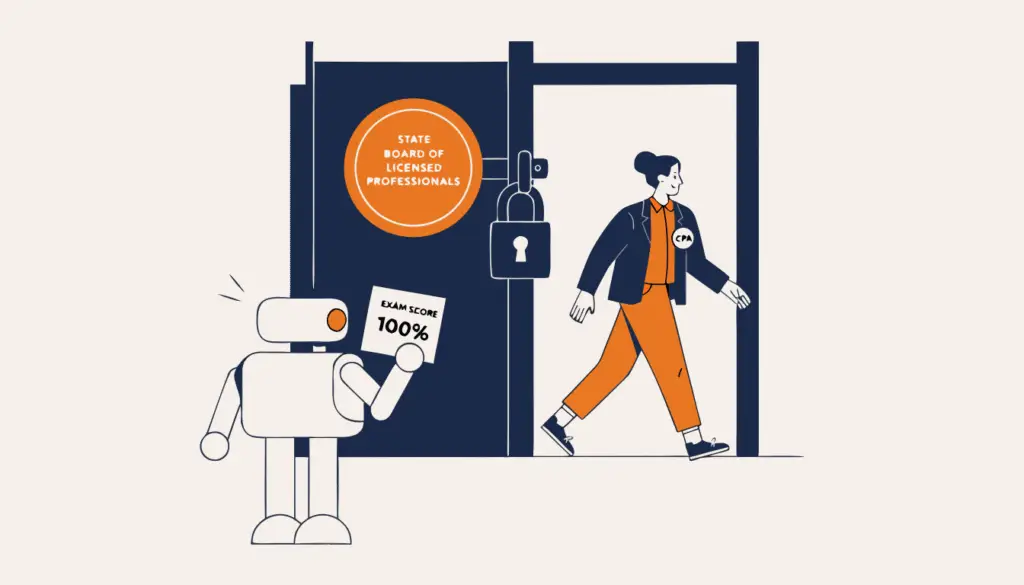
And that’s the part I didn’t think through carefully enough. Statutory credentialing requirements don’t move on the same timeline as market forces. The institutions that govern these credentials — state boards, the SEC, the AICPA — are slow-moving by design. Even when the market clearly signals that something needs to change, the regulatory and legislative machinery that would actually change it operates on a much longer clock. That gap between market pressure and institutional response is meaningful. It means that even as AI erodes the technical-skill signal quickly, the legal-scarcity value has a structural buffer that could hold for much longer than a decade.
What I’ll stand behind without hesitation: the technical-skill signal erodes roughly on the timeline I gave. What I’ll walk back is treating that as the whole picture.
Here’s the harder irony I didn’t anticipate: the legal-scarcity value might actually become more valuable as AI erodes everything around it — because it becomes one of the few professional moats that competence alone can’t buy.
Prediction #26: (Revisiting #4) Month-Close Won't Shrink Because of Real-Time Analysis — It Will Shrink Because of AI-First ERPs and Close Automation
Month-close isn’t purely a technology bottleneck waiting for better tools. And it isn’t a lower-level rote process that most people are eager to automate away. We have phenomenal tools today – with and without the assistance of AI. And we have extremely qualified and checked-in accounting/finance professionals who don’t wish to extract themselves from one of the most critical processes in the function.
What I underweighted: compliance with tax regulations, SEC filings, SOX certifications, and audits are all built around period-end reporting, not continuous data. Yes, real-time analysis is going to become far more valuable, but it doesn’t diminish the importance of month-close.
They’re complementary, not substitutes.
What I also underweighted: the significant unknowns around AI-first ERPs and close automation. We have companies like Rillet (which recently raised $100 million), NetSuite, Campfire, DualEntry and more that have entered this space aggressively. But we’re unlikely to see even the majority of small and mid-sized companies migrate to these platforms quickly. It will take time, and overcoming the skepticism that naturally surrounds a company’s most sensitive data.
A better version of my original prediction would have been: Month-close duties will shrink as AI-first ERPs and close automation become more capable and more widely accepted. Real-time analysis and month-close are going to coexist for longer than I implied — with AI gradually shifting the balance rather than flipping it overnight.
Prediction #27: (Revisiting #11) The Large Content Platform Aggregators Won't Become Irrelevant — They'll Pivot or Diversify to Survive
My original assertion that LinkedIn Learning, Udemy, and Coursera would lay off most people and either consolidate or become irrelevant was too absolutist. I try to avoid that framing, and I didn’t here.
Even if these platforms lose significant market share or struggle to enhance profitability, they’re likely to still be valuable to meaningful segments of the population. LinkedIn has been steadily reducing its workforce and integrating AI into its product, consistent with part of my prediction. Udemy and Coursera have consolidated and are pivoting toward B2B enterprise licensing rather than individual retail sales — also consistent with my prediction.

But I undercut my own argument from Prediction #3, where I wrote that trust and authority become more valuable in a world saturated with AI-generated content. These platforms already have video content from credentialed experts and recognized authorities. That existing library doesn’t become worthless because AI-generated content proliferates around it — if anything, the credentialed content may hold its value better than I implied.
A fairer version of my prediction: these platforms risk losing standing if they fail to evolve — but the more likely outcome is a pivot and diversification, similar to how Garmin adapted when Apple entered the GPS and maps space. They won’t disappear. But the ones that survive will look meaningfully different from what they are today.
Prediction #28: (Revisiting #23) Prompting Fluency Commoditizes Fast — But Workflow Intelligence Is a Durable and Undersold Skill
I used “prompt engineering” to describe two different types of skills, only one of which is actually commoditizing… and fast.
The first is prompting fluency: knowing how to phrase a request, provide context, and specify a format. This is what most people mean when they say “prompt engineering,” and its shelf life as a differentiator is already shorter than I estimated. The tools themselves keep getting better at inferring what you meant even when you didn’t say it well.

The second is what I’d now call workflow intelligence — knowing how to structure a repeatable, auditable AI process out of skills files, subagents, and deterministic checkpoints, so the output is reliable enough to put in front of a CFO or a lender. This is the skill my mastermind students would recognize from what I call the “Mechanics vs. Intelligence framework”: the shift from doing to designing the system that keeps doing correctly, every time, without you standing over it.
My own model-auditing and modeling-foundations skills files are a concrete example of the difference. It took days to build them effectively, and required a real understanding of how my own models are constructed, where they break, and how they roll forward. I don’t think that kind of judgment commoditizes on a one-to-two-year timeline — if at all in the foreseeable future. If anything, it becomes more valuable once basic prompting stops being a differentiator.
The correction: prompting fluency, I’ll keep the fast timeline I asserted. But with workflow intelligence, I undersold how durable it is and how much it matters by filing it under the same label.
Prediction #29 (New!): Offshore and BPO Finance Delivery Becomes Massively Vulnerable to AI
This is a new prediction I didn’t make when I wrote the original series months ago.
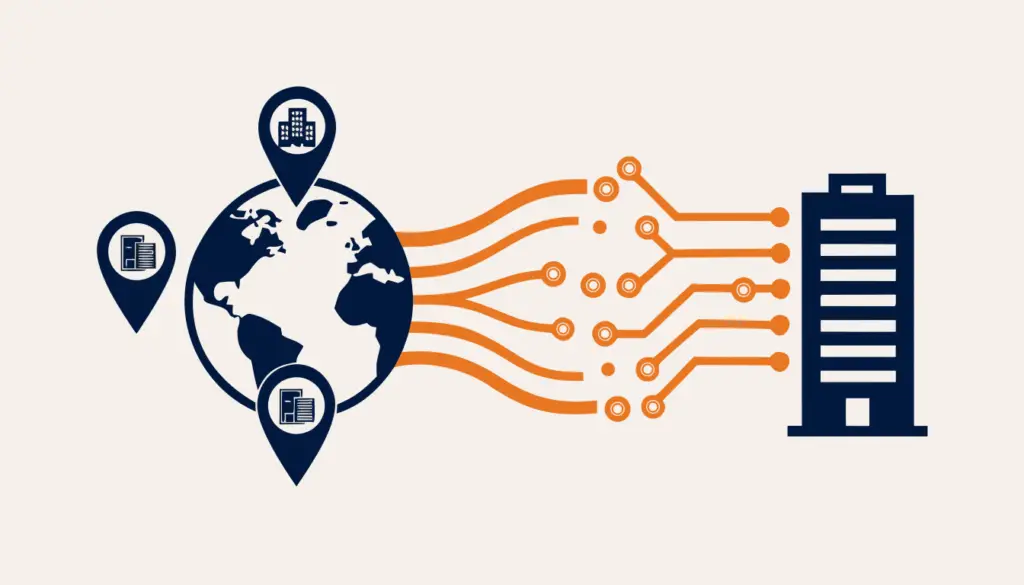
The finance and accounting operations that Genpact, WNS, EXL, and the Big Four’s global delivery centers run are built on a specific value proposition: lower-cost, high-volume execution labor in India, Brazil, the Philippines, and elsewhere. That is precisely the category of work that AI displaces first and most deeply.
This creates a vulnerability that I believe is larger and less discussed than the domestic workforce disruptions I wrote about throughout this series. My writing was naturally anchored in a U.S. perspective because that’s the context I operate in. But it’s quite possible the most acute early disruptions in finance and accounting will surface overseas first, as the offshoring model that justified moving that work there in the first place gets undercut by the same AI tools those firms are now trying to adopt.
The judgment-heavy domestic work may be next. But the high-volume, lower-cost execution work is already in the crosshairs.