
29 Predictions: How AI Will Eliminate the Finance Roles You Know Today
Predictions #17-21: The Finance Roles You Know Are Likely Going to Be Restructured
I’ve been building toward this issue deliberately. Before addressing what happens to specific finance roles, I wanted to establish the broader context. In my prior issues, I wrote that the credential system is under pressure, the educational pathways are being disrupted, the software landscape is shifting, and the skills that matter are going to change. All of that backdrop matters for what I’m about to say in this issue.
It’s also the part that feels most immediate for most people who may be reading this.
Disclaimer: The following views and opinions are my own and do not reflect the views or opinions of any professional organizations or enterprises I work/partner with.
Prediction #17: The Demand for Entry-Level FP&A Analyst Roles Shrinks in Odd Ways
So much of the chatter right now is about AI changing what analysts do. But as I mentioned in a previous series of The Statement, I actually believe AI is going to eliminate a significant portion of what analysts are hired for in the first place.
I’m receiving emails and direct messages weekly (and I mean genuinely weekly) from leaders asking whether they should hire a new analyst or just get really good at building AI applications. I’m getting messages from young people asking what they should be learning, given that they see the writing on the wall of what AI can do, and that it’s in direct competition to what they know. So I don’t just think it is a matter of young professionals focusing on different work – I think it’s a matter of there not being as many open roles for young humans period.
The entry-level FP&A role has been built around three core pillars:
- getting data,
- building models and analysis, and
- communicating the results.
That’s the bulk of what early-career analysts do — and for most of the history of the profession, we needed a human being to do all three every month.
If you’ve been experimenting with Claude, ChatGPT, Copilot, or Gemini, you’d acknowledge that they can handle all three of these pillars. And they can do it faster, without complaints, breaks for lunch, or a two-week onboarding process – not to mention throughout the night while the rest of the team is offline.
How do I know? Because that’s what I’ve been training my Claude and Copilot instances to do. It’s also what I’m doing at the management consulting firms I work with.
This is not a criticism of early-career analysts because, when I was starting out, that was the job I did and it made sense for people in their early 20s. But when human beings doing repetitive analytical work are no longer the most efficient way to get it done, many companies are going to ask a straightforward question about economics and labor: do we still need ten analysts?
Maybe they can get the same work done with three.
I speculate that the young analysts who do get hired won’t necessarily be the best doers. They’ll be the best thinkers — the ones who can evaluate AI output critically, understand where models break down, and bring judgment to situations the tool can’t navigate. The filter for hiring is probably going to change, not just the job description.

If companies can get more finance work done with fewer people, and demand doesn’t grow fast enough to absorb those productivity gains, I see the number of openings for entry-level finance practitioners falling sharply.
Two of the key questions I’m asking myself, and posing to those I talk about this existential reality with, is:
- How do we actually get young people to be thinking critically about finance when they don’t have the financial background and experience to think that way in the first place?
- If AI can do much of the work that helped us sharpen our skills when we were young, how do we sharpen the skills of the young people coming up now?
Prediction #18: A Critical Thinking Gap Puts Finance Follies on the Front Page of the News
Imagine a world in which technical people – young and experienced – are delusionally confident about their skills and deliverables. ChatGPT gaslights them, telling them that they’re always on the right track. Claude tells them that they’re almost to the finish line. Copilot gives them formulas in Excel that look right and get the job done, but the analyst doesn’t realize they’re poorly built.
We’re going to have a larger workforce of people who are artificially more confident than maybe they should be. It’s AI that gives them that false reassurance. But when they step into a meeting, they freeze when asked questions they can’t answer without AI because AI did their work for them in the first place.
In a recent workshop I delivered to a management consulting firm, I had a direct conversation with one of the VPs about this. He shared that one of his staff had built an inventory management model in Excel using AI. And when she put it confidently in front of him, he knew within minutes that it was wrong and unreliable.
I wrote in a previous issue my belief that table-stakes skills are going to change. I offered an analogy that being good at Excel might be similar to being a good typist.
I shared that, even though I’ve spent more than two decades teaching Excel to finance professionals, and I hold a Microsoft MVP designation that only 35 people in the US hold, my skills aren’t going to be as important as they once were. For much of my career, knowing how to build really good dynamic Excel models put me in a small percentage of finance professionals who could do something others genuinely couldn’t. And it’s helped me build a whole business.
But now, I have my accounting and finance function in my business running on Claude. Once a month, it rolls forward my revenue forecast. It highlights large expenses and tells me how this compares with prior months. It flags outstanding invoices. And it tells me what drivers and assumptions need to change for me to hit my revenue goals.
It can do this all in less than 15 minutes, far less time than it would take me to do it myself. Have I been replaced? In some ways, yes. But in the most important ways, no.
What doesn’t go away — and arguably becomes more valuable — is judgment and oversight. Knowing what to model. Knowing how a model should be structured. Knowing under what conditions the model breaks. Knowing whether the model is technically right but practically misleading, and what to do about it. All of this is going to matter so much more.

I’ll just say it – my biggest concern about AI making its way into finance is that people are going to get lazy, increasingly trusting and unwilling to put in the hard work to understand what they’re doing.
Just yesterday, I was talking to three leaders at another management consulting firm who shared their personal experiences with this. The firm is rolling out Claude and Copilot licenses while hearing about advisors putting questionable AI-generated models in front of clients. The biggest irony though? The advisors were veteran practitioners, not the young analysts.
This is the new reality we’re going to be facing. And we’re likely to see this gap in judgment finding its way into lackluster work, questionable judgment, financial fraud, and ultimately the front page of the news.
Prediction #19: Financial Modeling Becomes a Commoditized Skill — and Investment Banking Analyst Hiring Falls Dramatically
Earlier this year, I was contacted by an AI financial modeling software company that wanted to buy my models. I said no. But now that I reflect back on it, I realize that I should have said yes. A colleague of mine recently sold his models to Microsoft to help train Copilot. There’s nothing stopping anyone we cross paths with from taking our files and uploading them into these engines and having them trained. This isn’t about a transaction for a fee in a traditional sense. We’re basically selling off our IP for anyone to use.
Which brings me to AI skills, leveraged en masse, at some of the largest, most powerful, and influential firms on Wall Street.
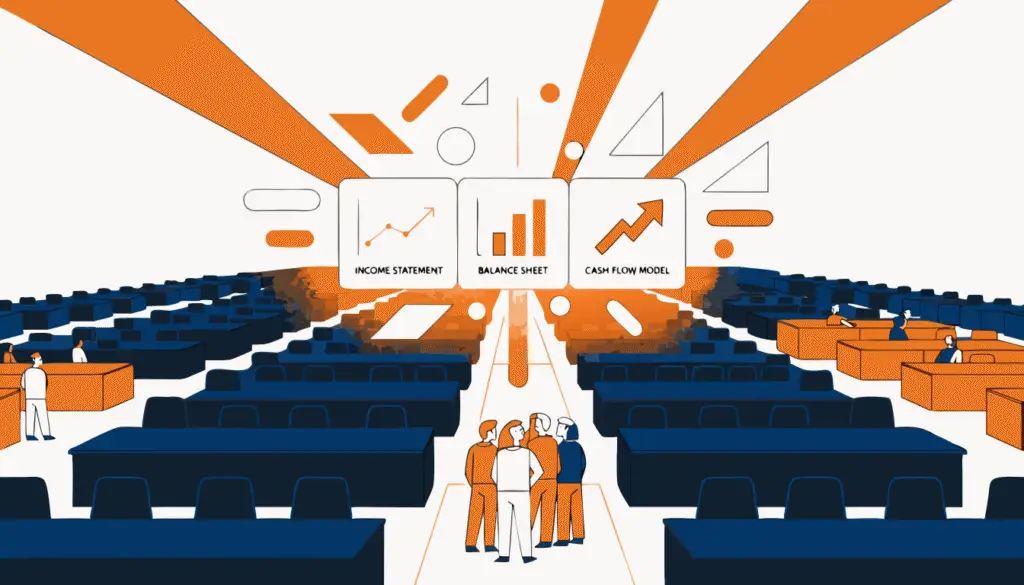
Paying Wall Street analysts $200,000 or more a year to build three-statement financial models — income statement, balance sheet, cash flow — doesn’t make much economic sense in a world where AI can do it. That’s part of why Anthropic and OpenAI have been actively recruiting from banking analyst pools to build training models.
If an investment banking analyst class can go from fifty people to ten — not by laying people off, but simply by not hiring them in the first place — the economics are clearly compelling for firms looking to manage workforce costs.
For the past several months, I’ve been going all-in on Claude skills, Cowork, and Code. Copilot has recently been catching up. And I shared in my last issue that Claude and ChatGPT models now sit inside of Copilot.
I’ve trained Claude on my own financial models. This includes structure, line items, color scheme, functions to use and those to avoid. I’ve built a skills markdown file to audit my financial models extensively, ranking every element by risk severity. It gets the job done quicker, more efficiently, and more thoroughly than I can manage alone — with a deep understanding of my own model-building processes built over twenty-plus years.
Why hire analysts and associates at all then? Because the needs for good modeling integrity and oversight don’t go away. They just become less demanding and for smaller numbers of very sharp people.
Some financial models, especially three-statement models and even my trusty weekly and monthly cash flow models, don’t require a ton of creativity or brainpower. They require understanding accounting equations, basic Excel formulas, and how to build something that can be defended. If a 21-year-old analyst can learn the mechanics through a few days of intensive Wall Street training, there’s no doubt that AI can do it too.
When AI can do more than half of entry-level work, firms may require half the number of people. And when AI agents with Claude Design are running all night, making pitch decks that were the justification for analysts working 120-hour weeks, does that mean that analyst salaries fall with the number of hours required? This completely changes the dynamics in these shops.
Prediction #20: Month-Close Duties Will Shrink as Real-Time Analysis and Reporting Becomes the Norm

The monthly close is one of the most common, yet time-consuming, rituals in Controllership and finance. For some companies, it’s just a few days. For others, it may be a couple of weeks out of the month. A team of people chasing journal entries, reconciling intercompany transactions, and producing a P&L.
The reason we accepted this process for so long was the absence of a better alternative. In recent years though, great software has emerged, but it typically sits in its own silo. It’s disconnected from everything else unless bridged through a connector or API.
If you’ve been watching this space over the past few years, that constraint is rapidly disappearing. Yes, individual players in the cloud ERP + AI space have raised hundreds of millions in funding. But Claude for Small Business, which was announced earlier this year, will be extremely disruptive. It runs inside the tools owners already rely on — QuickBooks, PayPal, HubSpot — and takes on the work that piles up after hours like planning payroll, chasing invoices, or kicking off a marketing campaign.
Can you hear the small business finance people letting out a sigh of relief? I can.
Small businesses account for 44% of U.S. GDP and employ nearly half the private-sector workforce. Yes, their adoption of AI has lagged behind larger, deeper-pocket enterprises, but now it’s accessible to the masses.
One of the most practical features I’ve been using in Claude Cowork is scheduled workflows — recurring workflows that AI executes on time intervals you define. I use it for my morning digest, where Claude looks at my calendar, outstanding projects, and emails and tells me what to do based on time and priority. I’ve also connected Claude to data repositories that can trigger requests on manual commands or automated ones. As I mentioned earlier in this article, I can now run 100% of my own business accounting and finance on Claude.
Claude already has open-source skills for creating financial statements and budget-to-actual variance analysis. These skills are being released continuously. And because they’re open-source, organizations can adapt them to their specific needs.
There’s little in the way of AI being able to automate month-close, especially when we have it running in the background and checking entries as they’re taking place throughout the month. Constraints are going to disappear. It’s just a question of whether companies are comfortable with their existing platforms and processes or whether they want to evolve and are comfortable connecting their data with outside platforms. That latter point, about cybersecurity, is a genuine concern and something I’ll address in future writing.
Don’t be surprised if bookkeeping, outsourced accounting, and controller work also contract as more organizations embrace these capabilities. But as I highlighted above, just because the number of roles will go down, doesn’t mean that the importance of the role goes away. The one in charge of overseeing (not necessarily doing) month close, will have to adopt a higher-level of critical thinking than the person doing it today.
Prediction #21: In-House Finance Departments Will Get Smaller at Mid-Market Companies as AI-Augmented Fractional Finance Teams Become More Capable
A 200-person company with $40 million in revenue today might have a CFO, two FP&A analysts, a Controller, and a staff accountant. Five people doing jobs that individually require different skills and different time commitments.
The model that’s emerging — and I’m already seeing early versions of it — is a small, highly skilled fractional team supported by AI tools that handle the volume work. One experienced CFO, one operator who manages the systems and keeps them running, and AI handling everything that doesn’t require human judgment.
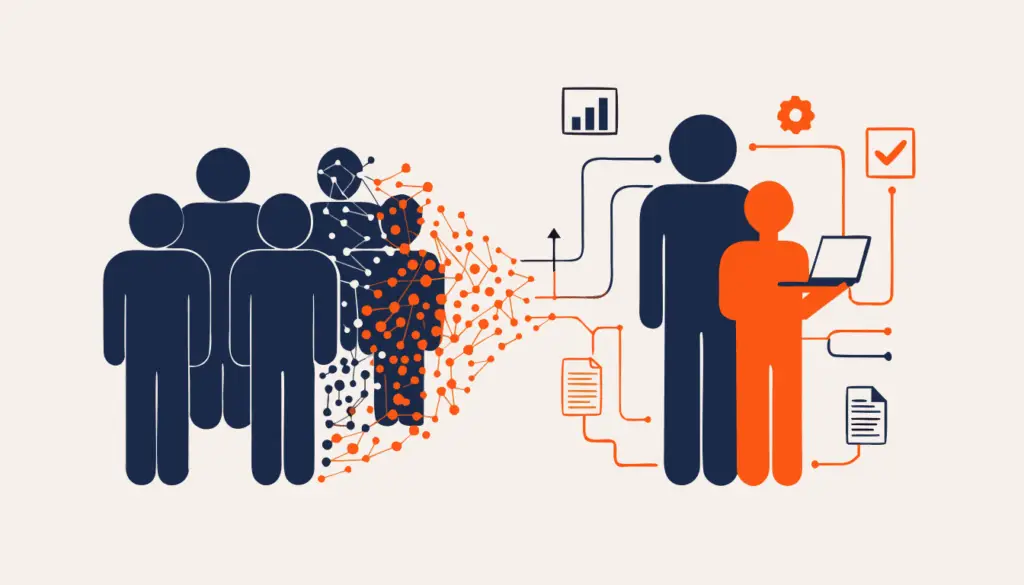
If I had to speculate, I believe that private equity is going to drive this faster than anyone else. PE firms can be notoriously aggressive about taking costs out of portfolio companies. When they can demonstrate that an AI-augmented two-person finance team delivers the same quality of reporting and analysis as a five-person department, that calculation becomes hard to contest.
The rollout will be fast once the software and services package becomes clearer. I don’t think we’re far off from that as we’re seeing those software companies now.
The analyst who can configure and interpret AI-generated analysis is valuable. The analyst who can only produce it manually is replaceable. In the long run, it likely means those roles simply don’t get filled when they turn over, versus seeing a wave of immediate layoffs.



1 Comment